
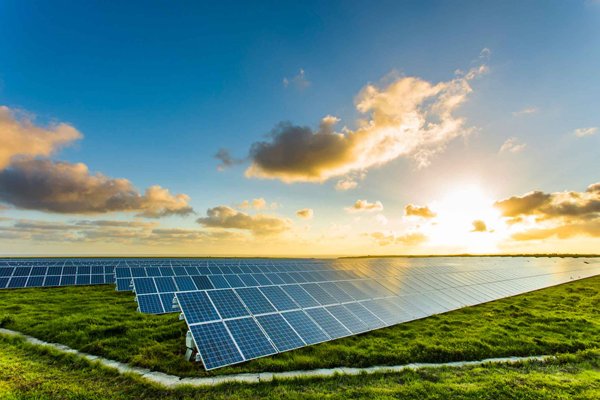
Agrivoltaics is an emerging approach to solar energy generation that involves combining solar panels with agricultural practices such as crop production, livestock grazing, or pollinator habitats on a piece of land. Agrivoltaics aims to maximize land productivity and resource use by integrating solar panels with other land uses. Solar panels provide clean energy production while providing benefits such as shade, reduced water evaporation, and temperature regulation for cultivated plants or animals.
This innovative approach promotes both food or biomass production and clean energy production, fostering a symbiotic relationship between agriculture and solar energy that increases the Earth’s productivity and contributes to a more resilient and profitable future.
The difference between Agrivoltaics and other solar energy schemes is that the land under and around the solar panels is used for another purpose. This unique feature offers several advantages:
land optimization: Agrivoltaics enables the productive use of land by combining solar energy production with agricultural activities. It enables farmers to produce clean energy while using the same land to grow crops or graze livestock, maximizing land efficiency and productivity.
Increase product yield: The presence of solar panels on top of the crops creates shade and reduces excessive heat and evaporation. This shading effect helps create a microclimate that can reduce extreme temperature fluctuations and water loss, leading to improved crop yields and reduced water requirements.
Increased resource efficiency: The coexistence of solar panels and crops improves resource efficiency. The panels capture solar energy to generate electricity, while the shading effect reduces the need for irrigation and conserves water.
Diversification of income: Agrivoltaics can provide additional income streams to farmers, enabling them to produce and sell clean energy alongside their agricultural products. This variety of income sources can contribute to the economic viability and flexibility of agricultural operations.
One of the main challenges with agrivoltaic systems is that the initial cost of agrivoltaic systems can be expensive, as they often have more complex designs than traditional solar panels and may require structural changes to enable dual land use. Despite the long-term cost savings, equipment and construction costs can be high compared to traditional farming or stand-alone solar installations. Financial barriers may hinder widespread adoption, especially for small-scale farmers or resource-constrained areas.
Another challenge, as with many early-stage technologies, is ensuring that farmers have access to training, technical assistance, and educational resources for farmers, agricultural system designers, and policy makers to fully understand the potential benefits and overcome the challenges associated with implementing agrivoltaic projects. Interest in agrivoltaic is increasing, so ensuring that farmers have the resources they need to implement agrivoltaic systems in the future will be critical.
The installation of agrivoltaic systems requires finding agricultural land that is suitable for both solar farms and agricultural operations, while overcoming the limitations of transmission and grid connection and attracting farmers interested in innovating their operations. Meeting all three conditions can be challenging.
Currently, there are several agrivoltaic projects throughout Minnesota, but the technology is still emerging. All projects in Minnesota include pollinator habitat, grazing or a combination of the two.
Pollinator-friendly agrovoltaic systems have shrubs, grasses, and nectar or pollinator flowers that attract pollinators such as bees and butterflies under and around the solar panels. These projects can increase pollination services for nearby crops. Improved pollination can increase crop yield, improve fruit quality, and increase seed production, benefiting farmers. In addition, solar installations that create pollinator habitat can result in savings in operation and maintenance costs over time due to the benefits that pollinators provide to ecosystem health. Most of the pollinator-compatible agrivoltaic systems in Minnesota are located in the southern half of the state.
Minnesota-based Connexus Energy uses pollinator-friendly agrivoltaics. An article published by the company describes their partnership with Prairie Restorations, through which they designed a pollinator-friendly flowering meadow under a solar array on campus. Since then, Connexus has made land stewardship a priority in all of its solar projects, which now cover more than 120 acres and cultivate more than 15 million native, pollinator-friendly plants.
Many studies are currently underway to better understand the extent of benefits of pollinator-compatible agrivoltaic systems, including one in Minnesota. The Department of Energy’s Innovative Solar Methods Integrated with Rural Economies and Ecosystems (InSPIRE) project is conducting pollinator-friendly agrovoltaic research in Anoka and Atwater counties. The state government has also shown its support for pollinator-friendly agrivoltaics.
In 2022, Minnesota established the Habitat Friendly Solar Program, which supports the creation of pollinator-friendly solar projects through technical resources and project assessment forms.
Agro-grazing projects combine solar energy production with livestock grazing under or between solar panels. Integrating livestock grazing with solar energy generation can provide additional income streams for farmers. By using the land for livestock grazing, farmers can diversify their farming activities and at the same time earn money from solar energy production. The benefits of managed grazing to soil health can also provide long-term cost savings for farmers. InSPIRE is currently researching agrivoltaics grazing in Chisago. The Habitat Friendly Solar Program also supports grazing projects.
While there are currently many pollinator habitats and agrivoltaic grazing facilities throughout Minnesota, there are still no projects for agricultural production. More than 70 percent of agricultural land in Minnesota is used for corn and soybean production. Agrivoltaics are only compatible with shade-tolerant plants such as leafy greens, and corn and soybeans require full sunlight to grow. Researchers across the country are working to understand what types of crops are best suited to agrivoltaics in which locations. They also look at which locations and conditions are suitable for pollinator-friendly, grazing and cropping systems.
Agrivoltaics has great potential for continued growth in the coming years. With increasing concerns about solar energy and land use, agrivoltaics offers a multi-land use solution. The following are contributing to the growth of agrivoltaics in Minnesota:
Policy and regulatory framework: Policies supporting agrivoltaics will help accelerate its growth. This may include financial incentives, tax breaks or grants for solar farmers and developers who adopt agrivoltaics systems.
Research and demonstration projects: Conducting research and demonstration projects specific to Minnesota’s climate, agricultural practices, and crop types can help validate the feasibility and benefits of agrivoltaics in Minnesota.
Education of farmers and society and information: Educating farmers about the benefits and potential challenges of agrivoltaics is essential. Training programs, workshops and training programs can be organized to provide farmers with the necessary knowledge to decide whether they wish to implement agrivoltaics. In addition, interacting with local communities and raising awareness about the benefits of agrivoltaics can help build public support for these projects.
Cooperation and participation: Collaboration between various stakeholders is critical to the growth of agrivoltaics in Minnesota. It involves partnerships between solar developers, agricultural organizations, research institutes and government agencies. Sharing knowledge, expertise and resources can accelerate the implementation of agrivoltaic projects.
Federal policymakers are in a bipartisan effort to boost high-voltage power across the country. The Pollinator Force Act, proposed by Senators Jeff Merkley (D-Oregon) and Cory Booker (D-New Jersey), aims to prioritize solar projects that create habitat for pollinators. The Agrivoltaics Research and Demonstration Act, introduced by Senators Martin Heinrich (D-New Mexico) and Mike Braun (R-Indiana), seeks to allocate $75 million over four years for research and demonstration projects related to agrivoltaics. According to Canary Media, these bills aim to address concerns about the loss of agricultural land to solar farms, while at the same time supporting farmers and advancing climate goals. These bills provide funding for research and help fill knowledge gaps to determine the viability of agrivoltaics in different regions and crops or livestock.
As agrivoltaics gains momentum, it will create new opportunities in the agriculture and energy sectors and offer a path that reconciles food production and clean energy production. With continued research, supportive policies and collaborative efforts, agrivoltaics is poised to maintain steady growth in Minnesota and beyond for years to come.